The Somatotroph Axis
Tesamorelin is a synthetic analogue of Growth Hormone-Releasing Hormone (GHRH). It consists of the 44-amino acid sequence of human GHRH with a hexenoic acid group attached to the N-terminal, which significantly increases its stability.
Selective GH Stimulation
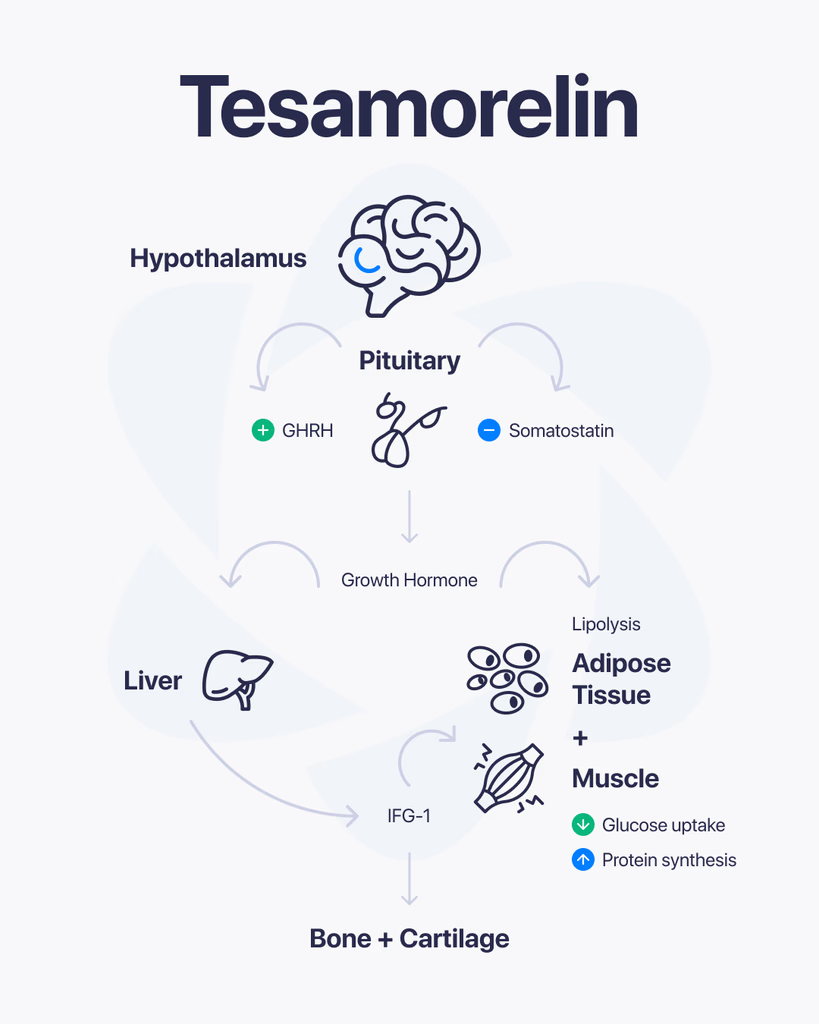
In research models, Tesamorelin binds to GHRH receptors in the anterior pituitary gland, stimulating the synthesis and release of endogenous growth hormone. This is a regulated, pulsatile release that more closely mimics natural physiological patterns compared to direct hormone administration.
Visceral Adipose Research
Tesamorelin is frequently used to study the selective reduction of visceral adipose tissue (VAT). Interestingly, while it significantly impacts deep abdominal fat, it appears to have minimal effect on subcutaneous fat, making it a valuable tool for studying regional fat distribution and metabolic health.
Scientific References:
[1] Falutz, J., et al. (2010). "Effects of Tesamorelin, a Growth Hormone–Releasing Factor Analog, in HIV-Infected Patients with Abdominal Fat Accumulation." NEJM.
[2] Spooner, L. M., & Lessard-Chaudoin, S. (2012). "Tesamorelin: a growth hormone-releasing factor analogue." Annals of Pharmacotherapy.