1. Introduction
Peptides have emerged as an important class of bioactive molecules in modern biomedical research. Among them, BPC-157 has gained considerable attention due to its broad spectrum of biological activities and remarkable stability in gastric environments.
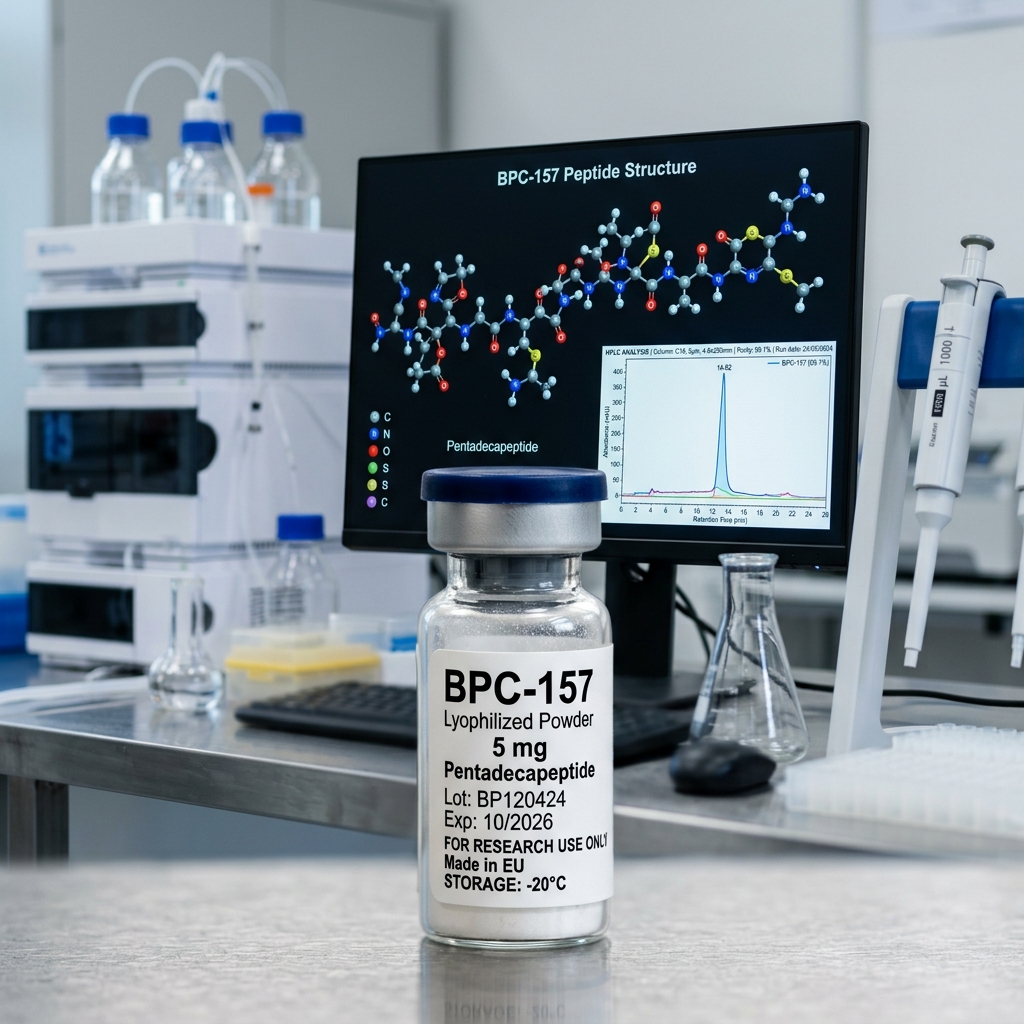
BPC-157 consists of 15 amino acids and originates from a partial sequence of a naturally occurring protein in human gastric juice. Unlike many peptides that are rapidly degraded in physiological conditions, BPC-157 demonstrates high stability and bioavailability, making it an attractive candidate for therapeutic development.
2. Molecular Structure and Characteristics
Chemical Name: Body Protection Compound-157
Sequence: Gly-Glu-Pro-Pro-Pro-Gly-Lys-Pro-Ala-Asp-Asp-Ala-Gly-Leu-Val
Molecular Formula: C62H98N16O22
Molecular Weight: 1419.53 Da
Key Properties:
- High stability in gastric acid
- Water-soluble peptide
- Resistant to enzymatic degradation
- Demonstrates systemic biological activity after administration
3. Mechanisms of Action
Although the complete molecular mechanisms remain under investigation, current evidence suggests that BPC-157 exerts its effects through multiple biological pathways.
3.1 Angiogenesis Modulation
BPC-157 appears to stimulate angiogenesis by upregulating vascular endothelial growth factor (VEGF) signaling pathways. Studies have demonstrated increased endothelial cell migration and blood vessel formation following BPC-157 administration.
3.2 Nitric Oxide System Regulation
Research indicates that BPC-157 interacts with the nitric oxide (NO) pathway, contributing to vascular homeostasis and tissue repair. This modulation may explain its protective effects in ischemic and inflammatory conditions.
3.3 Anti-Inflammatory Activity
Experimental models have shown reductions in pro-inflammatory cytokines and inflammatory tissue damage following BPC-157 treatment. Potential targets include TNF-α, IL-6, and NF-κB signaling pathways.
3.4 Cytoprotective Effects
BPC-157 exhibits broad cytoprotective activity across multiple tissues, including the gastrointestinal tract, liver, skeletal muscle, tendons, ligaments, and nervous tissue.
4. Biological Activities
4.1 Tendon and Ligament Healing
One of the most extensively studied applications of BPC-157 is musculoskeletal repair. Animal studies have demonstrated accelerated tendon regeneration, improved collagen organization, enhanced fibroblast activity, and increased biomechanical strength of repaired tissues. These findings suggest potential utility in sports medicine and orthopedic recovery.
4.2 Gastrointestinal Protection
BPC-157 was originally investigated due to its protective role in gastrointestinal tissues. Preclinical studies have reported benefits in gastric ulcer healing, intestinal injury repair, inflammatory bowel disease models, and gastrointestinal fistula recovery.
4.3 Muscle Regeneration
Experimental evidence indicates that BPC-157 may enhance skeletal muscle repair following injury by promoting satellite cell activation and angiogenesis.
4.4 Neuroprotective Effects
Emerging research suggests potential neuroprotective properties, including reduction of neuronal damage, improved functional recovery after injury, and modulation of neurotransmitter systems.
4.5 Cardiovascular Protection
Several studies have reported improvements in endothelial function and vascular integrity, contributing to enhanced blood flow, reduced thrombosis risk, and protection against ischemic injury.
5. Safety Profile
Current toxicological investigations indicate a favorable safety profile in animal models, showing no significant organ toxicity, no observed mutagenic effects, and no significant adverse cardiovascular outcomes. However, controlled human clinical trials remain limited, and long-term safety and efficacy require further investigation before widespread therapeutic adoption.
6. Current Research Limitations
Despite promising findings, several challenges remain: most published studies involve animal models rather than randomized human trials; BPC-157 is currently not approved by the U.S. Food and Drug Administration (FDA) for therapeutic use; and many observed biological effects have not yet been fully explained at the molecular level.
7. Future Perspectives
The broad biological activity of BPC-157 positions it as a promising candidate for future therapeutic development in areas such as sports injury recovery, tissue engineering, gastrointestinal disorders, neuroregenerative medicine, and vascular repair. Future randomized clinical trials will be essential for validating its efficacy and safety in humans.
Conclusion
BPC-157 represents a unique bioactive peptide with significant regenerative and cytoprotective potential. Extensive preclinical evidence supports its beneficial effects on tissue healing, angiogenesis, inflammation modulation, and gastrointestinal protection. While the current body of research is encouraging, further human clinical studies are necessary to establish definitive therapeutic applications and regulatory acceptance.
Scientific References:
[1] Sikiric P., Seiwerth S., Rucman R., et al. Stable Gastric Pentadecapeptide BPC-157 in Therapy of Gastrointestinal and Systemic Disorders. Current Pharmaceutical Design. 2018.
[2] Huang T., Zhang K., Sun L., et al. Body Protective Compound-157 Enhances Tendon Healing in Experimental Models. Journal of Orthopaedic Research. 2015.
[3] Vukojevic J., Siroglavic M., Kasnik K., et al. The Therapeutic Potential of BPC-157 in Tissue Repair and Regeneration. Frontiers in Pharmacology. 2022.
[4] Cesarec V., Becejac T., Misic M., et al. Angiogenic Effects of BPC-157 Through VEGF Signaling Pathways. Biomedicines. 2021.
[5] Sikiric P., Hahm K.B., Blagaic A.B., et al. Cytoprotective Properties of Stable Gastric Pentadecapeptide BPC-157. Journal of Physiology and Pharmacology. 2020.