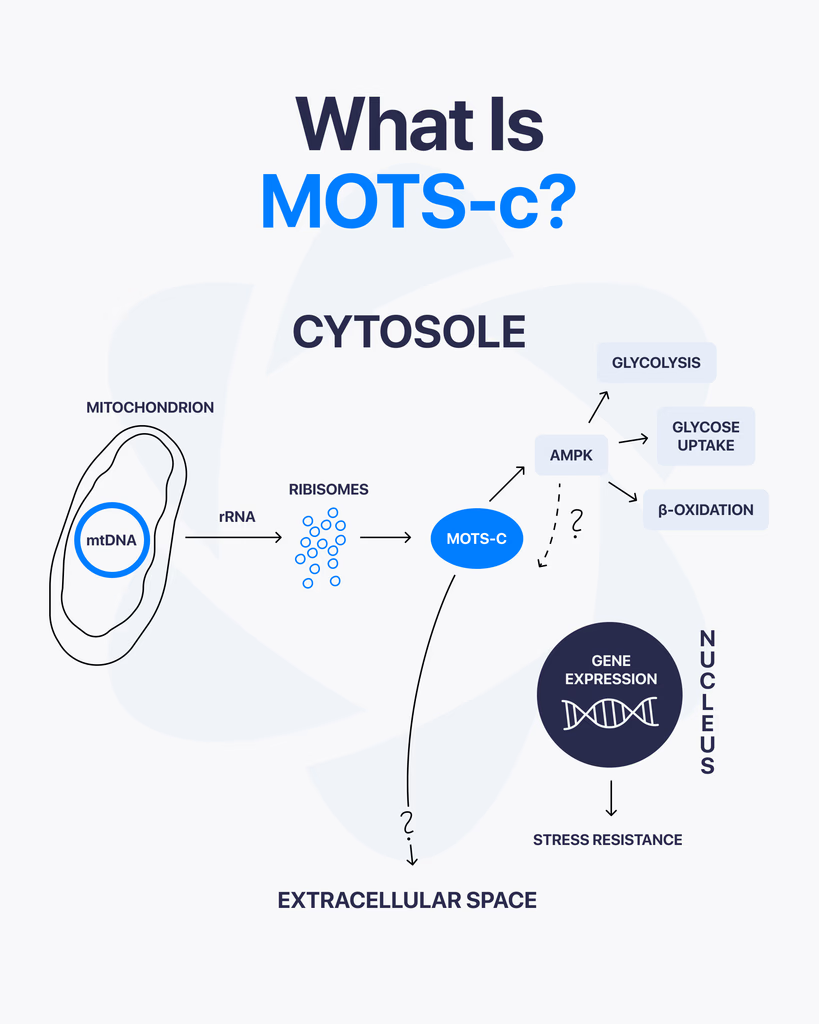
Mitochondrial-Derived Signaling
MOTS-c is a 16-amino acid peptide encoded by the mitochondrial genome rather than the nuclear genome. It represents a paradigm shift in how researchers view mitochondria—not just as "powerhouses" but as active signaling hubs for systemic regulation.
AMPK Activation
A primary focus of MOTS-c research is its ability to activate the AMP-activated protein kinase (AMPK) pathway. This signaling pathway is a central regulator of energy metabolism, influencing how cells process glucose and fatty acids.
Links to Aging and Exercise
Studies have explored how MOTS-c levels correlate with exercise and the aging process, with research investigating its potential to mitigate metabolic decline in various age-sensitive experimental models.
Scientific References:
[1] Lee, C., et al. (2015). "The Mitochondrial-Derived Peptide MOTS-c Promotes Metabolic Homeostasis and Reduces Diet-Induced Insulin Resistance." Cell Metabolism.
[2] Kim, S. J., et al. (2018). "Mitochondrial-derived peptides as novel regulators of metabolism." Journal of Molecular Medicine.