.png)
The Gold Standard of Purity
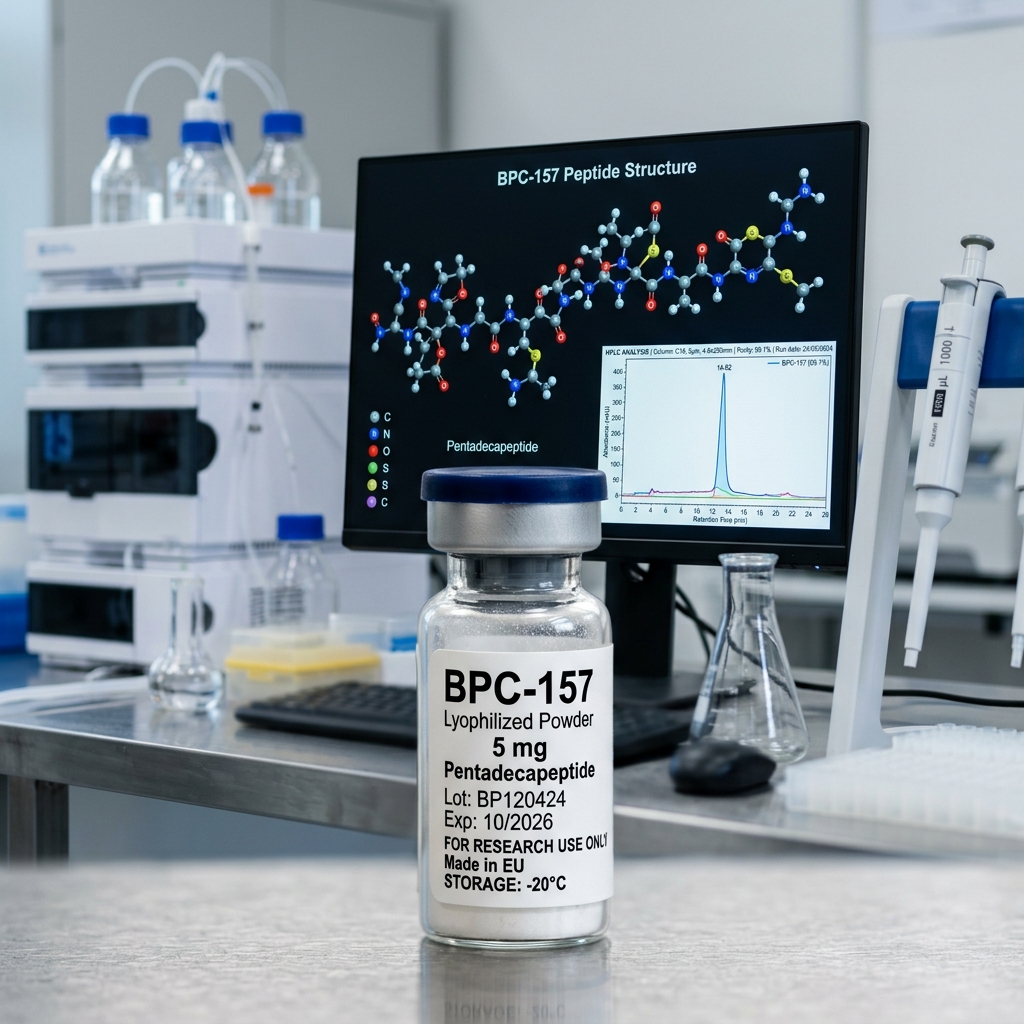
High Performance Liquid Chromatography (HPLC) is the cornerstone of modern peptide analysis. It is a pressurized technique used to separate, identify, and quantify each component in a mixture, ensuring that a synthetic peptide meets architectural purity standards.
How Modern HPLC Works
The process involves a mobile phase (the solvent containing the peptide) being pumped through a column filled with a stationary phase (adsorbent material). Because different molecules interact with the stationary phase at different rates, they emerge from the column at different times, allowing for precise separation.
Purity Verification
In the peptide industry, HPLC is used to generate "chromatograms"—visual charts where peaks represent individual compounds. For research-grade peptides, labs typically target a purity peak of >98% to 99%, ensuring that by-products from the synthesis process have been effectively removed.
Scientific References:
[1] Aguilar, M.-I. (2004). "HPLC of Peptides and Proteins: Methods and Protocols." Methods in Molecular Biology.
[2] Hearn, M. T. (1991). "HPLC of Proteins, Peptides and Polynucleotides." VCH Publishers.