Regenerative Signaling
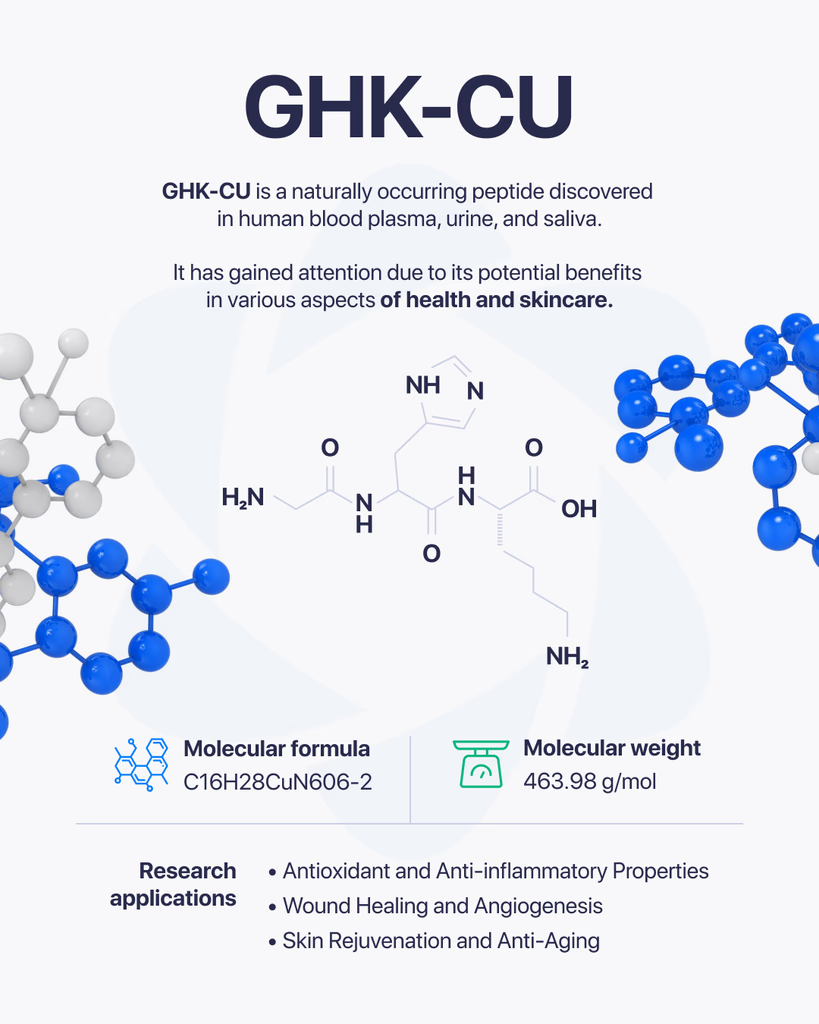
GHK-Cu is a naturally occurring copper complex of the tripeptide glycyl-L-histidyl-L-lysine. It was first isolated from human plasma and has since been a staple of regenerative research due to its affinity for copper—a vital element for cellular repair.
Tissue Remodeling
Researchers have studied GHK-Cu extensively for its ability to influence the production of collagen and elastin. By signaling fibroblasts, it appears to help rebuild the extracellular matrix, making it a key subject in studies regarding skin aging and wound healing.
Anti-Aging Research
Beyond skin, GHK-Cu is explored for its antioxidant properties and its ability to modulate genes associated with aging and cellular senescence, offering deep insights into the biology of tissue longevity.
Scientific References:
[1] Pickart, L., & Margolina, A. (2018). "Regenerative and Protective Actions of the GHK-Cu Peptide in the Light of the New Gene Data." International Journal of Molecular Sciences.
[2] Pickart, L., et al. (2015). "The human tripeptide GHK-Cu in prevention of oxidative stress and degenerative diseases of aging." Oxidative Medicine and Cellular Longevity.