A New Era of Amylin Research
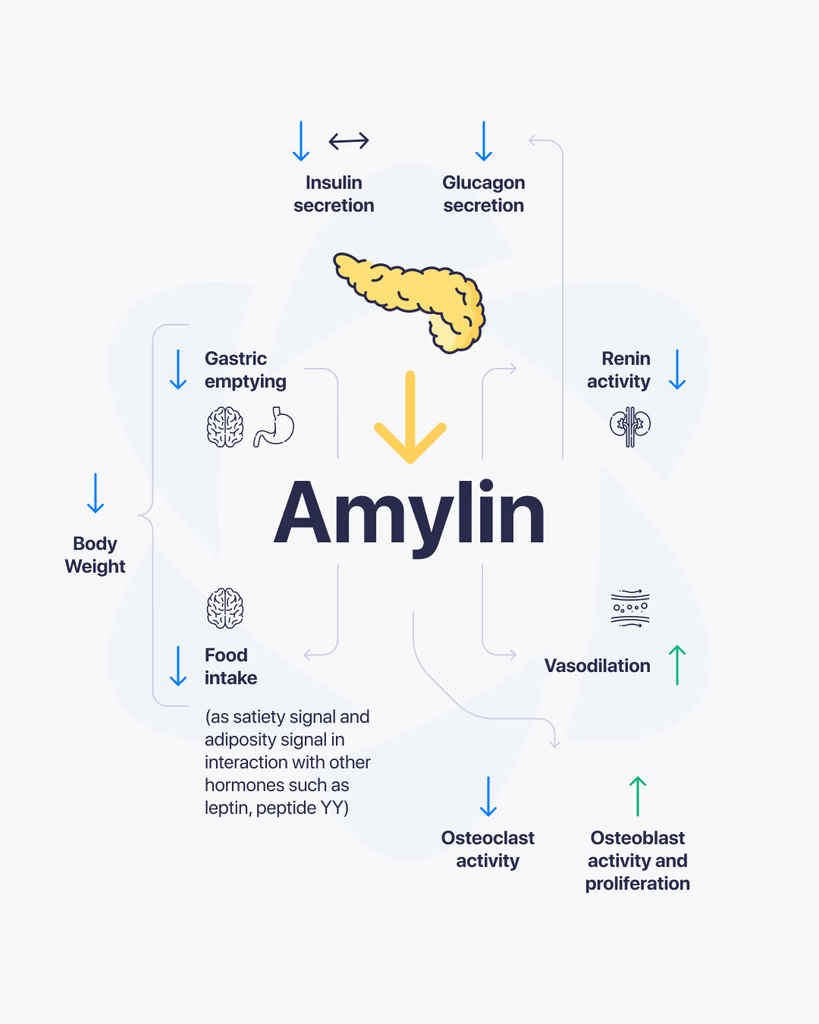
Cagrilintide is a synthetic, long-acting analogue of human amylin. Amylin is a peptide hormone co-secreted with insulin from the pancreatic beta cells, primarily known for its role in regulating food intake and gastric motility.
Mechanism of Synergy
Researchers are particularly interested in Cagrilintide because it acts on different satiety receptors than GLP-1. While GLP-1 focuses on the incretin effect, amylin analogues signal through the area postrema in the brain. When studied in combination, these two pathways show a powerful synergistic effect on metabolic rate.
Pharmacology Profile
Unlike native human amylin, which has a very short half-life, Cagrilintide is engineered for stability. This allows for long-term experimental observation of how chronic amylin receptor activation influences body weight markers and glucose metabolism in laboratory models.
Scientific References:
[1] Kruse, T., et al. (2021). "The Discovery and Development of Cagrilintide." Journal of Medicinal Chemistry.
[2] Enebo, L. B., et al. (2021). "Safety, tolerability, pharmacokinetics, and pharmacodynamics of cagrilintide." The Lancet.