Mechanisms of Cellular Repair
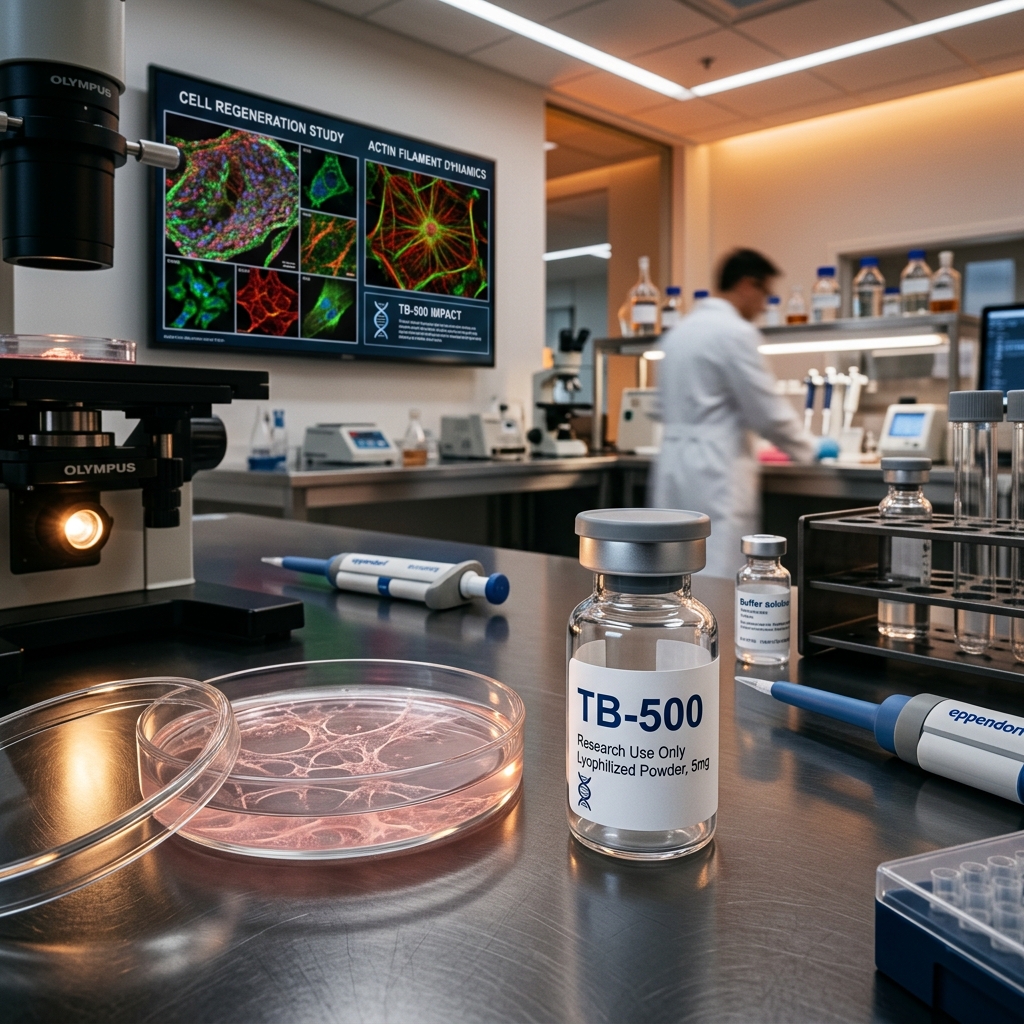
TB-500 is a synthetic peptide that mirrors a portion of thymosin beta-4, a naturally occurring protein found in nearly all human and animal cells. Researchers became interested in TB-500 for its potential role in cellular migration, tissue repair, and angiogenesis, leading to studies across wound healing and hair follicle biology.
Why Study TB-500 and Hair Follicles?
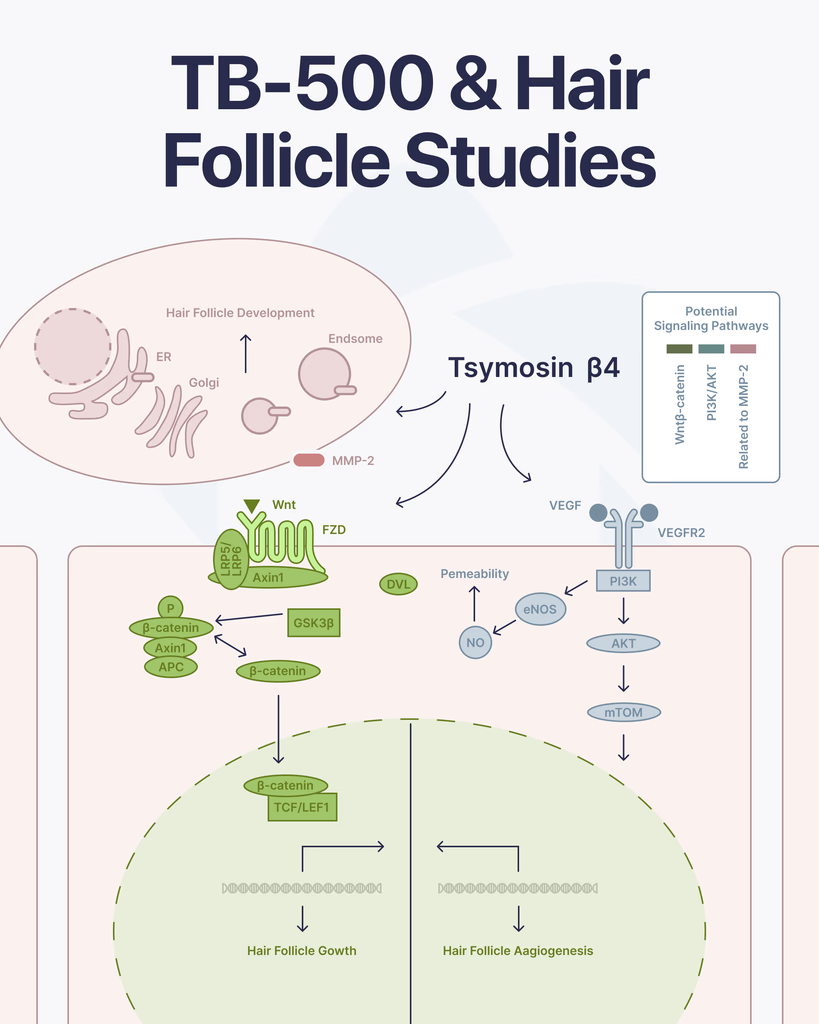
Hair follicle growth and cycling depend on cell migration, angiogenesis (the formation of new blood vessels), and extracellular matrix remodeling—processes in which thymosin beta-4 has been heavily implicated. Since TB-500 is derived from this protein, researchers have explored its influence on follicle biology in experimental settings.
Key Research Observations
Published studies on thymosin beta-4 fragments like TB-500 report significant findings:
- Stem Cell Activity: Activation of stem cells in the hair follicle bulge region in murine models.
- Vascularization: Increased blood vessel formation around follicles, suggesting improved nutrient delivery.
- Wound Healing Context: Parallel pathways between follicle activation and skin repair have made TB-500 a subject of intense study in regenerative medicine.
Scientific References:
[1] Philp, D., et al. (2004). "Thymosin beta4 promotes angiogenesis, wound healing, and hair follicle development." Mechanisms of Ageing and Development.
[2] Goldstein, A. L., et al. (2012). "Thymosin β4: a multi-functional regenerative peptide. Basic properties and clinical applications." Vitamins and Hormones.