Engineering Peptide Stability
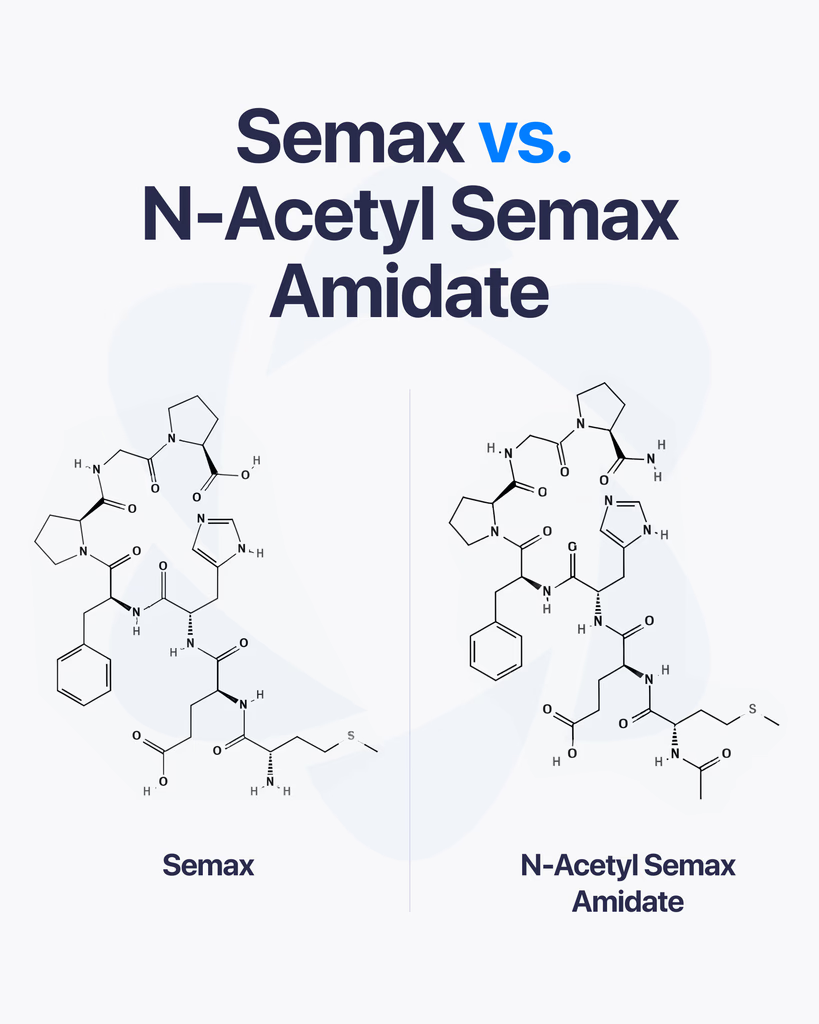
Semax is a synthetic heptapeptide derived from ACTH(4-7). To improve its half-life and permeability, researchers have developed modified variants like N-Acetyl Semax Amidate. These modifications involve adding an acetyl group at the N-terminus and an amide group at the C-terminus.
Stability and Half-Life
In vitro studies suggest that these modifications create a more "rugged" molecule that can better resist proteolytic enzymes. This increased stability allows for a longer timeframe to study the peptide's interaction with neurotrophic factors.
Research Focus
While the original Semax remains the most documented globally, the acetylated and amidated variants represent the cutting edge of research into neuroprotection and cognitive enhancement in complex biological models.
Scientific References:
[1] Ashmarin, I. P., et al. (1997). "Semax: a new drug for the therapy of stroke and other CNS diseases." Journal of Molecular Neuroscience.
[2] Ershov, P. V., et al. (2016). "Comparative study of the properties of Semax and its metabolites." Russian Chemical Bulletin.