The GHRH 1-29 Analog
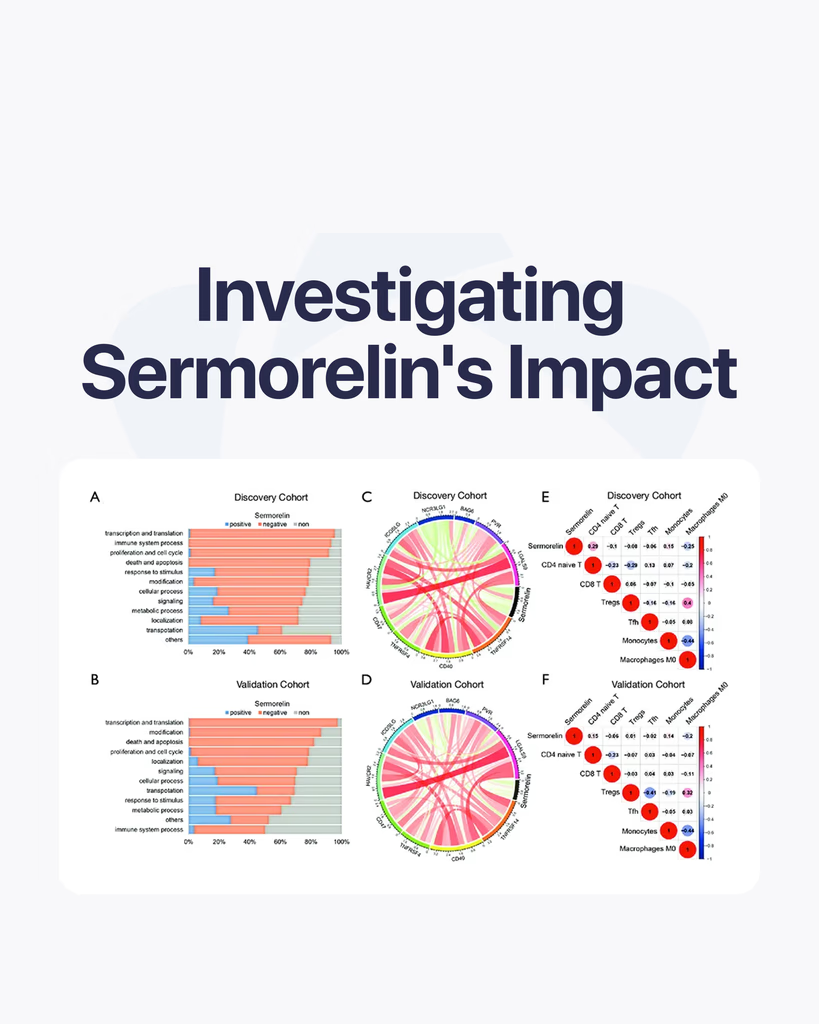
Sermorelin is a truncated analog of the naturally occurring growth hormone-releasing hormone (GHRH). It contains the first 29 amino acids of the GHRH sequence, which are sufficient for maintaining full biological activity at the receptor level.
Activation of Somatotrophs
In pituitary research, Sermorelin is used to study the stimulation of somatotroph cells. This activation leads to a regulated release of GH, which in turn influences the systemic production of IGF-1 (Insulin-like Growth Factor 1).
Downstream Proliferation
Research into Sermorelin often focuses on its indirect effects on cell proliferation through the GH/IGF-1 axis, providing insights into tissue repair, organ development, and general cellular maintenance pathways.
Scientific References:
[1] Vance, M. L. (1990). "Growth hormone-releasing hormone." Clinical Chemistry.
[2] Khorram, O., et al. (1997). "Effects of administration of growth hormone (GH)-releasing hormone 1-29 on the GH-insulin-like growth factor-I axis." Journal of Clinical Endocrinology & Metabolism.