Targeted Peptide Fragments
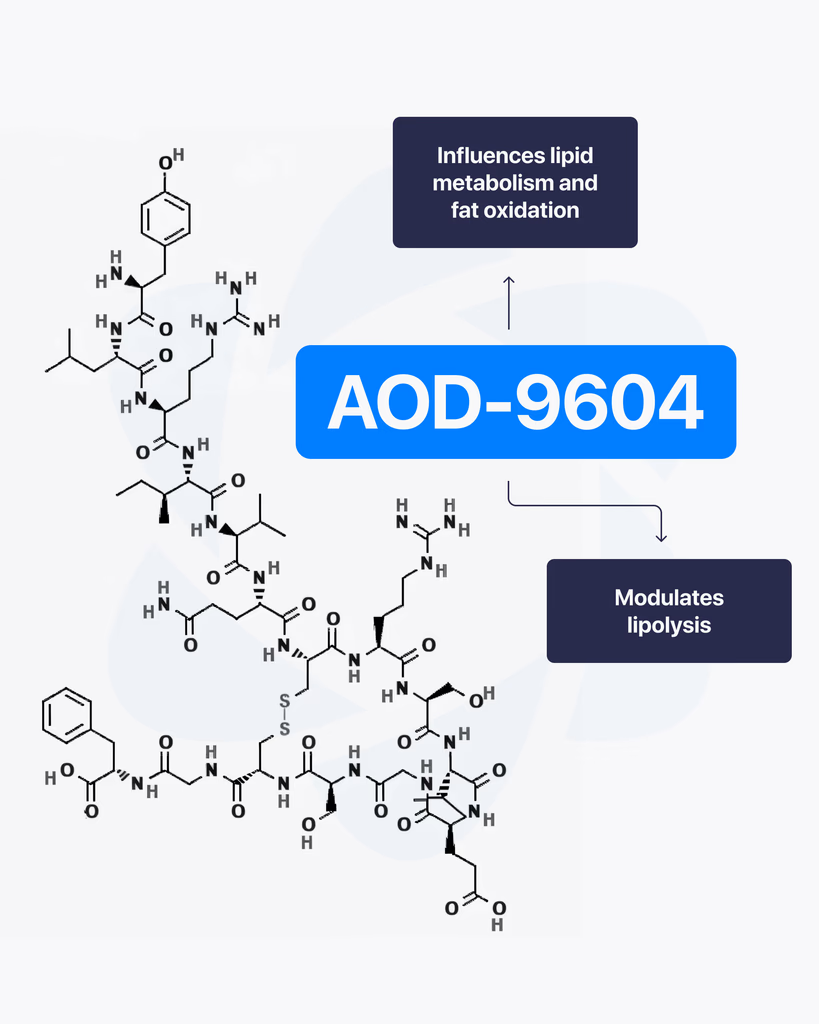
AOD-9604 is a synthetic peptide derived from the C-terminal end of human growth hormone (hGH). Specifically, it corresponds to amino acids 177–191. It was designed to isolate the fat-burning (lipolytic) properties of HG without the systemic IGF-1 stimulation associated with the full hormone.
Metabolic Observations
In laboratory models, AOD-9604 has been studied for its ability to stimulate lipolysis (fat breakdown) and inhibit lipogenesis (the creation of new fats). Its selectivity makes it a valuable research tool for studying metabolic pathways in isolation.
Beyond Metabolism
Recent studies in animal models have also explored the peptide's potential role in cartilage repair and joint health, expanding the research envelope from purely metabolic studies to regenerative orthopedics.
Scientific References:
[1] Heffernan, M., et al. (2001). "The effects of human GH and its lipolytic fragment (AOD9604) on lipid metabolism in obese rats." Journal of Endocrinology.
[2] Ng, F. M., et al. (2000). "Metabolic studies of a synthetic lipolytic domain (AOD9604) of human growth hormone." Hormone Research.