The "Glass" vs. The "Living"
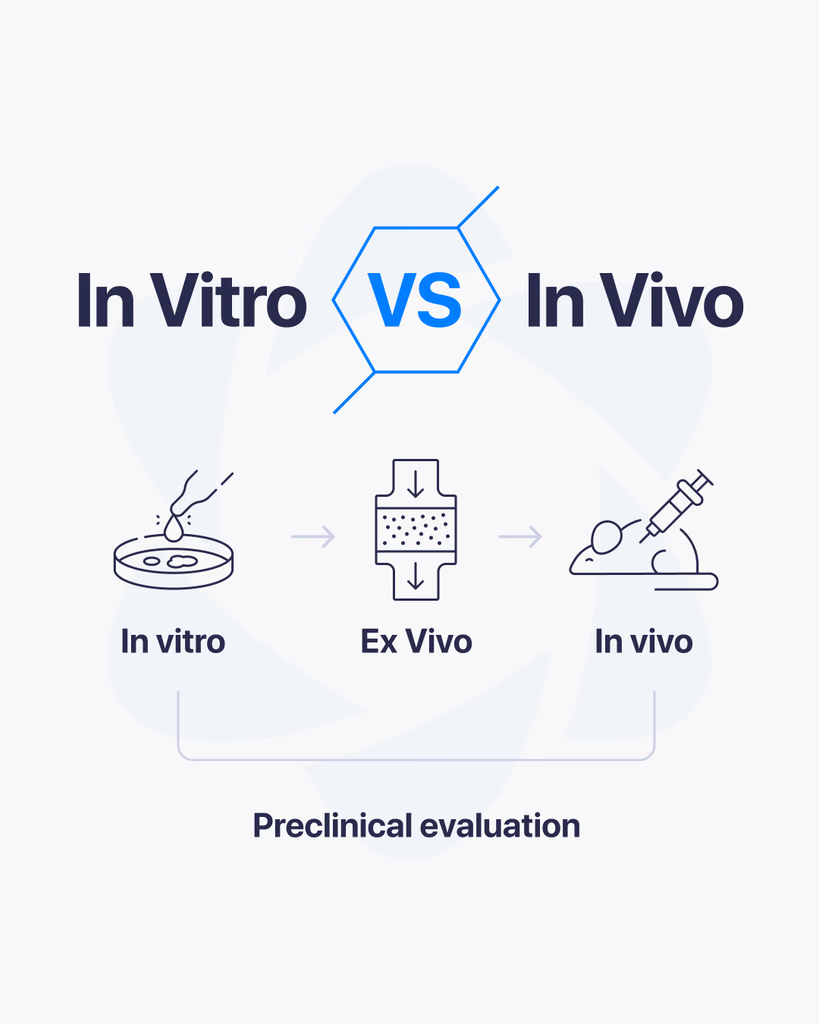
Every breakthrough in peptide science begins with one of two methodologies: In Vitro (Latin for "in glass") or In Vivo (Latin for "in the living"). Understanding the strengths of each is critical for interpreting scientific data correctly.
In Vitro: Molecular Precision
In vitro studies are conducted in a controlled environment like a petri dish. They allow researchers to observe how a peptide interacts with a single cell type without the noise of a full biological system. This is where primary mechanisms are discovered.
In Vivo: Systemic Complexity
In vivo studies are conducted in living organisms. They are essential for understanding how a compound is metabolized, distributed, and eventually excreted. It is the gold standard for verifying whether a mechanism discovered "in glass" holds true in a complex system.
Scientific References:
[1] Rothman, K. J., et al. (2008). "Modern Epidemiology." Lippincott Williams & Wilkins.
[2] Gad, S. C. (2014). "Animal Models in Toxicology." CRC Press.