The Role of Inactive Ingredients
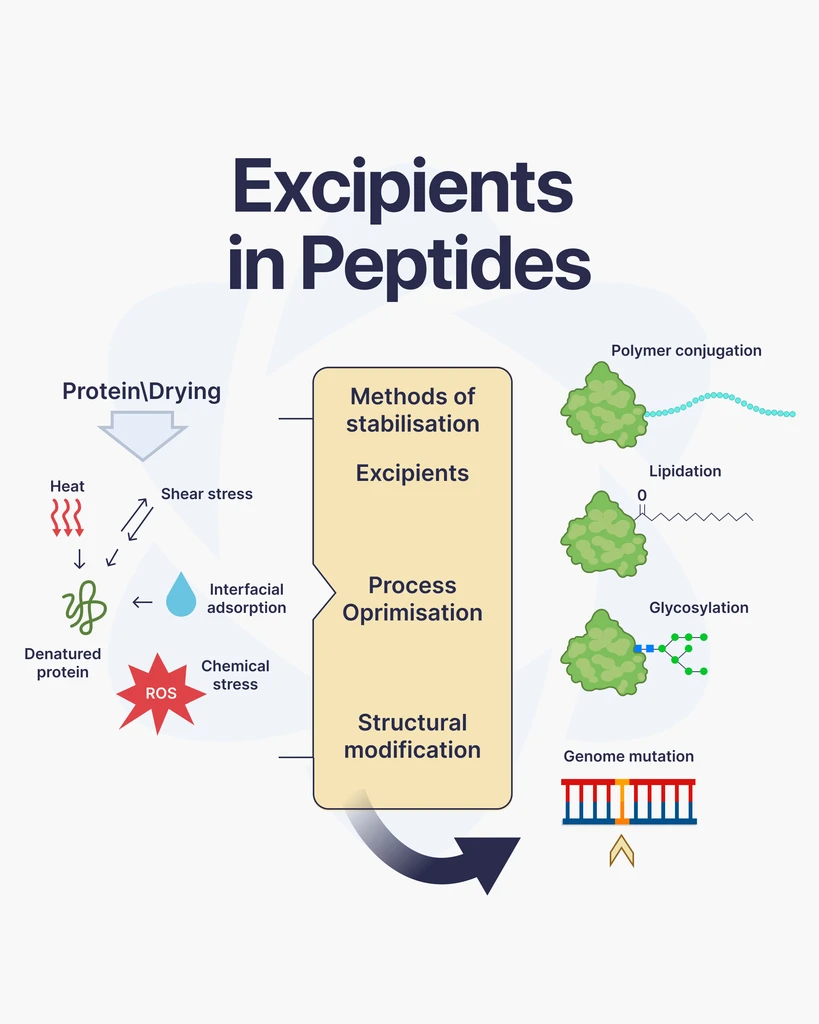
In the world of synthetic peptides, the "active" compound is only part of the story. Excipients are inactive substances formulated alongside the peptide to ensure stability, solubility, and integrity during transport and storage.
Common Stabilizing Agents
- Mannitol & Trehalose: Primary cryoprotectants used during the lyophilization (freeze-drying) process to prevent structural collapse.
- Arginine & Glycine: Amino acid stabilizers used to maintain optimal solubility in solution.
- Polysorbates: Surfactants used to prevent the aggregation of peptide molecules on the surfaces of glass vials.
Why Excipients Matter in Research
Without proper stabilization, sensitive peptides can degrade rapidly when exposed to temperature shifts or light. For researchers, excipients ensure that the molecular fidelity of the sample is preserved from the lab to the final experiment, ensuring reproducibility in assays.
Scientific References:
[1] Wang, W. (2000). "Lyophilization and development of solid protein pharmaceuticals." International Journal of Pharmaceutics.
[2] Carpenter, J. F., et al. (1997). "Rational design of stable lyophilized protein formulations: some practical advice." Pharmaceutical Research.