The Future of Industrial Catalysis
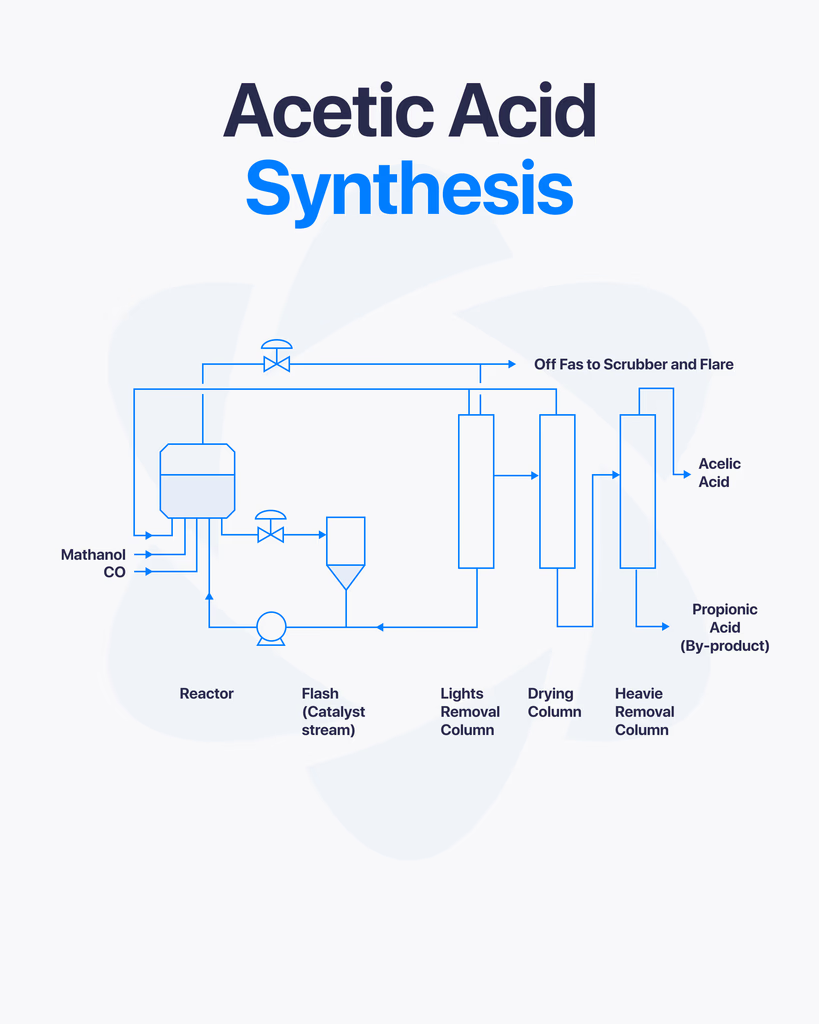
As of 2025, the synthesis of acetic acid has seen a shift toward more sustainable, high-efficiency methods. While the traditional Monsanto and Cativa processes remain foundational, new innovations focus on "Green Carbonylation."
Carbon Capture & Utilization (CCU)
Recent research highlights the direct conversion of CO2 into acetic acid. Breakthroughs in photocatalytic CO2 reduction using materials like ZnIn2S4 have allowed researchers to achieve acetic acid production under ambient conditions with high selectivity.
Sustainable Catalytic Routes
Green catalytic routes now incorporate metal-organic frameworks (MOFs) to increase the efficiency of the reaction while reducing the reliance on precious metals, marking a significant milestone in industrial chemical engineering.
Scientific References:
[1] Jones, J. H. (2000). "The Cativa™ Process for the Manufacture of Acetic Acid." Platinum Metals Review.
[2] Sun, Z., et al. (2024). "Advances in Photocatalytic CO2 Reduction to Acetic Acid." Chemical Society Reviews.